Articles in this Volume

Research Article Open Access
Research on the application of metaverse technology in digital power grids
With the advancement of the "dual-carbon" strategy and the rapid construction of new power systems, traditional power grids are facing challenges such as large-scale renewable energy integration, increasingly complex operating structures, and insufficient intelligent operation and maintenance capabilities. Metaverse technology integrates digital twins, the Internet of Things, artificial intelligence, 5G communication, big data, and virtual reality technologies, providing a new development direction for digital power grid construction. Based on the Fujian digital power grid pilot project, this paper systematically studies the application of metaverse technology in digital power grids. The study analyzes the development background of new power systems and the limitations of traditional grids, proposes the overall architecture of metaverse-based digital power grids, discusses key technologies such as digital twins, AI, and blockchain, and further explores practical scenarios including intelligent inspection, renewable energy forecasting, carbon emission monitoring, and disaster warning. The results show that metaverse technology can effectively improve the visualization, intelligence, and collaborative operation capabilities of power grids, providing important support for future smart energy systems.
Show more
Read Article PDF
Cite
Research Article Open Access
Research trends of logistics system complex networks based on CiteSpace
Article thumbnail
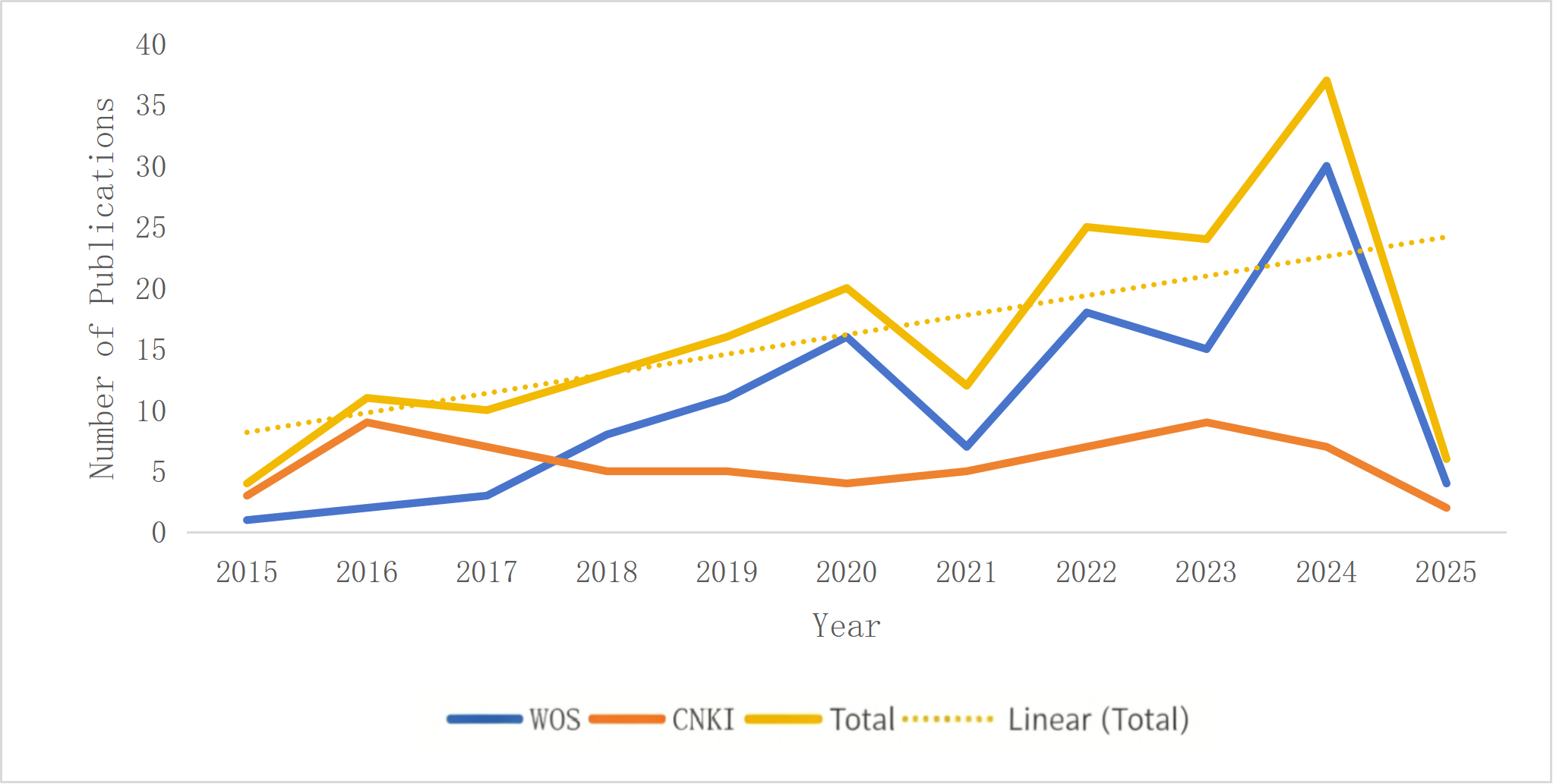
With the expansion of global trade, the explosive growth of e-commerce, and the continuous improvement of logistics infrastructure, logistics systems have become increasingly large-scale and complex. Research on logistics systems based on complex network theory has provided effective approaches for addressing the complexity-related challenges faced by modern logistics operations. Drawing on core journal publications on logistics system complex networks indexed in the China National Knowledge Infrastructure (CNKI) and the Web of Science (WoS) from 2015 to 2024, this study employs the bibliometric visualization software CiteSpace to conduct a systematic visual analysis. The research examines publication trends, research institutions, countries, keyword co-occurrence, and keyword clustering to identify and compare major research hotspots in China and abroad. Based on these findings, the study summarizes the current state of research and discusses future development directions.
Show more
Read Article PDF
Cite
Research Article Open Access
Shipment consolidation with time-dependent waiting costs and carbon emissions
This paper addresses the stochastic shipment consolidation problem faced by a supplier serving multiple customers with intermittent demand. The key innovation is we consider carbon emission as well as the modeling of waiting costs as time-dependent linear functions of elapsed waiting duration, which captures the practical reality that customer impatience escalates with delay. We build a four-dimensional Markov Decision Process with state tracking both accumulated demand and waiting time for each customer. We establish three structural properties of the optimal policy. We show that the value function is monotone in all state variables. A consolidation-dominance result shows that individual shipment is never optimal when both customers have positive demand. We found that the optimal policy possesses a threshold structure in waiting time. We conduct experiments to demonstrate that the optimal consolidated shipment policy achieves a 41.4% reduction in total expected cost and a 61.2% reduction in CO 2 emissions compared to the immediate shipment benchmark. A sensitivity analysis with respect to the time pressure coefficient c 1 reveals that cost savings range from 57.3% (low time pressure) to 35.3% (high time pressure), which quantifies the fundamental tension between responsiveness and consolidation depth.
Show more
Read Article PDF
Cite
Research Article Open Access
Hype or quality? Determinants and prediction of player ownership on Steam
Article thumbnail
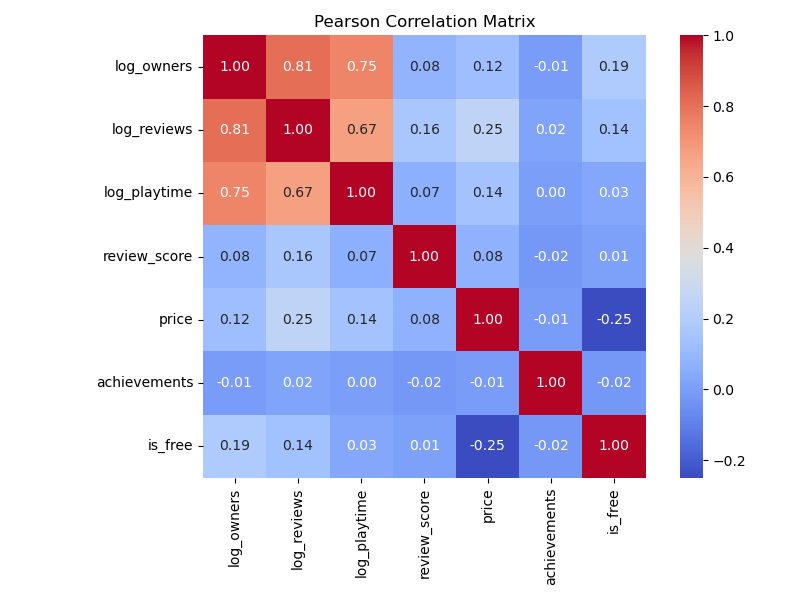
With the rapid development of digital gaming platforms, Steam has become one of the most representative PC game distribution platforms globally. This study uses publicly available data from the Kaggle platform (Steam Store Games) as the research object, with player ownership (Owners) as the core metric, and employs OLS regression and random forest models to build prediction models, evaluating model performance through 5-fold and 10-fold cross-validation. Addressing "Can machine learning effectively predict player ownership?" "What are the differences in predictive power between popularity signals and reputation signals?" and "What are the differences in performance between linear and nonlinear models?" three research questions, the results show that: the Steam game market exhibits a significant power-law distribution characteristic, with the top 10% of games concentrating 84.2% of the player base; the random forest model significantly outperforms OLS regression (R²= 0.835 vs. 0.745, MAE reduced by approximately 40%), indicating that player ownership and features have nonlinear relationships; review count is the most important predictive variable for player ownership (feature importance 0.767, standardized coefficient 0.764), followed by average playtime, while review score and price have relatively limited effects. The study demonstrates that, compared to reputation factors reflected by user ratings, market attention reflected by review count has stronger predictive power for game player scale. This study provides empirical reference for game platform data analytics and game market prediction research.
Show more
Read Article PDF
Cite
Research Article Open Access
User segmentation and personalized content recommendation of digital media based on Principal Component Analysis and K-Means algorithm
With the booming digital media industry, platforms accumulate massive multi-dimensional user behavior data, while the traditional unified content push method fails to meet differentiated user demands. High-dimensional raw user data contains plenty of redundant features, which hinders accurate user grouping and content matching. This paper combines Principal Component Analysis and K-Means clustering to study digital media user segmentation and personalized content recommendation. It aims to solve data redundancy and low-efficiency user grouping problems and design differentiated recommendation strategies for different user groups. This research adopts data mining, quantitative analysis and empirical research, taking real platform user logs covering usage duration, opening frequency, interaction volume, content preference and active periods as research samples. Principal Component Analysis eliminates redundant dimensions of the original data, and K-Means realizes user clustering with K=3. Empirical results prove that platform users fall into three categories: high-frequency in-depth users, casual browsing users and vertical interest users with obvious behavioral gaps. The Principal Component Analysis-K-Means hybrid model removes data noise effectively and achieves precise segmentation; group-targeted recommendation strategies can greatly improve platform content delivery efficiency and user activity.
Show more
Read Article PDF
Cite
Research Article Open Access
The fundamental role of generating functions for generalized binomial coefficients in combinatorics
The generating function method is an important counting technique in combinatorics. Starting from the generalized binomial theorem, this paper derives the generating function expressions for seven common sequences and establishes a unified theoretical framework for generating functions of generalized binomial coefficients. It is proved that these special sequences can all be regarded as special cases or corollaries within this framework, thereby revealing the intrinsic logical connections among different generating functions. Furthermore, we introduce a new concept, termed the "genealogy of generating functions," which integrates isolated generating functions of sequences into a coherent theoretical system. By applying this method, we prove two classes of summation identities, demonstrating that this approach can effectively simplify combinatorial proof procedures.
Show more
Read Article PDF
Cite
Research Article Open Access
The impact of board digital cognition on the execution quality of corporate ESG strategy
Article thumbnail
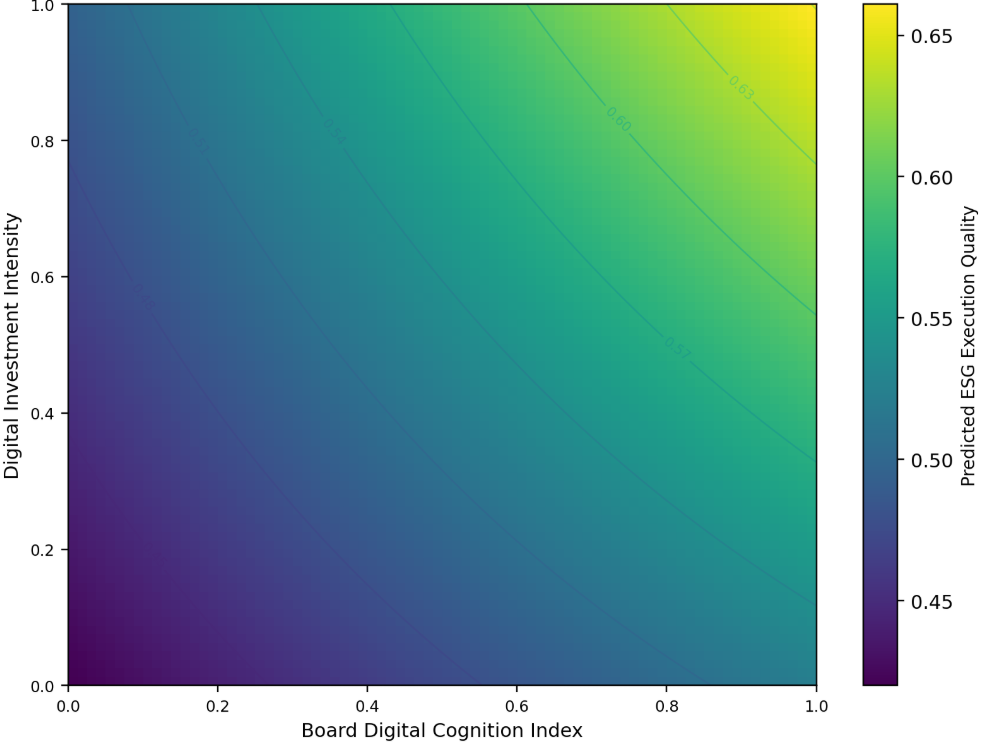
Against the background of deep integration between digital transformation and ESG governance, corporate ESG strategy no longer remains at the level of responsibility disclosure or image construction. It is gradually shifting toward target decomposition, resource allocation, process supervision, and performance improvement. As the core body of strategic decision-making and governance supervision, the board affects how firms understand ESG data, risk information, and execution processes through its level of digital cognition. Based on public disclosures of A-share non-financial listed companies from 2016 to 2023, the board digital cognition index can be constructed from directors' digital backgrounds, digital governance expressions, digital committee settings, and digital training disclosures. ESG strategy execution quality can be measured through target completion, quantitative disclosure, investment intensity, rating improvement, and penalty deductions. The baseline regression results show that board digital cognition has a significant positive effect on ESG strategy execution quality. The mechanism tests further show that internal control quality and digital investment strengthen this influence path. This finding indicates that board digital cognition not only reflects the upgrading of the governing body's knowledge structure, but also promotes the shift of ESG strategy from formal disclosure to substantive execution by improving information processing, supervisory constraints, and resource allocation.
Show more
Read Article PDF
Cite